
Find Your Yeezy Size Without Treating Every Model the Same
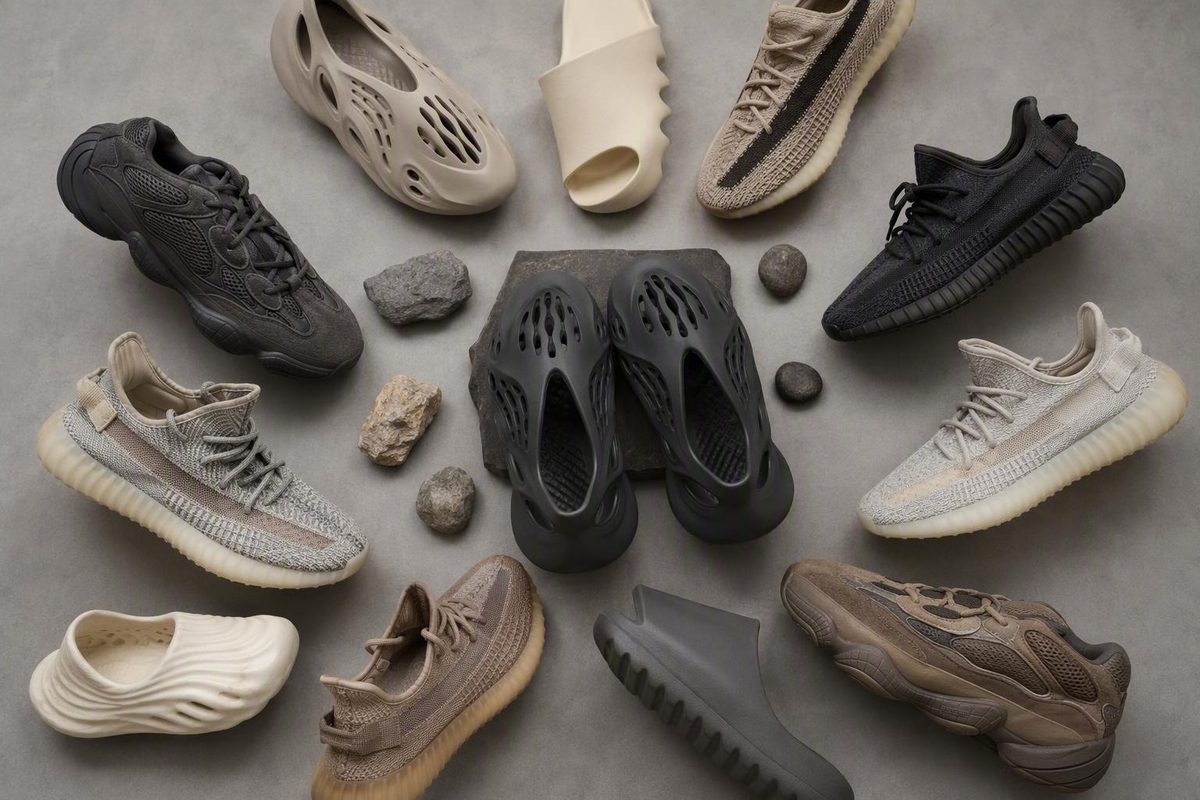
Use separate charts for sneakers, Slides and Foam RNNRs. The 350 V2 commonly starts half a size up, while wide-foot wearers may prefer a full size up.
Last reviewed August 8, 2026. Conversion tables were checked against the linked source pages; model-fit recommendations remain third-party guidance rather than manufacturer-confirmed rules.
The quick answer: choose the Yeezy model before choosing the size
Start by identifying which category you are buying:
- Standard Yeezy sneakers, including the Boost 350, 380, 500, 700, 750, Quantum, and Desert Boot.
- Yeezy Slides.
- Yeezy Foam RNNRs.
These categories should not share one universal Yeezy shoe size chart. Standard sneakers commonly appear in half sizes and use fractional EU labels, while the cited Slide and Foam RNNR charts use whole US men’s sizes and different international conversions.
Fit is a separate question. Third-party guides commonly describe several Yeezy silhouettes as fitting slightly small, but differences among models make “always go half a size up” unreliable. The Boost 350 V2 has the clearest pattern: half a size up is a common starting point, while some wearers choose true size and others—particularly those with wide feet—prefer a full size up.
Use a two-stage process:
- First, convert the nominal label. Find the corresponding US men’s, US women’s, UK, EU, JP, or KR size using the chart for the correct product category.
- Then adjust for fit. Consider the exact silhouette and version, foot width, intended socks, factory or aftermarket insole, and whether you prefer a snug or relaxed fit.
The charts below come from third-party retailers and marketplaces. They are not presented as verified current adidas or Yeezy manufacturer charts.
| Go to | Best for |
|---|---|
| Standard Yeezy sneaker chart | Converting standard sneaker labels |
| Yeezy Slide chart | Converting Slide whole sizes |
| Yeezy Foam RNNR chart | Converting Foam RNNR whole sizes |
| How to measure your feet | Recording foot length and width |
| Model-by-model fit guide | Comparing true size, half a size up, and a full size up |
| Wide feet and half sizes | Resolving between-size decisions |
Standard Yeezy sneaker size chart: US, EU, and centimeters
The following is a third-party Qwintry sneaker chart, not an official adidas chart. Qwintry recommends measuring foot length and choosing from its centimeter column, but its table does not rigorously establish whether every centimeter figure represents measured foot length, footwear-last length, or internal shoe length. “Qwintry chart value” is therefore the most precise label.
Third-party Qwintry standard Yeezy sneaker chart:
| EU | US | Qwintry chart value |
|---|---|---|
| 36 | 4 | 22 cm |
| 36⅔ | 4.5 | 22.5 cm |
| 37⅓ | 5 | 23 cm |
| 38 | 5.5 | 23.5 cm |
| 38⅔ | 6 | 24 cm |
| 39⅓ | 6.5 | 24.5 cm |
| 40 | 7 | 25 cm |
| 40⅔ | 7.5 | 25.5 cm |
| 41⅓ | 8 | 26 cm |
| 42 | 8.5 | 26.5 cm |
| 42⅔ | 9 | 27 cm |
| 43⅓ | 9.5 | 27.5 cm |
| 44 | 10 | 28 cm |
| 44⅔ | 10.5 | 28.5 cm |
| 45⅓ | 11 | 29 cm |
| 46 | 11.5 | 29.5 cm |
| 46⅔ | 12 | 30 cm |
| 47⅓ | 12.5 | 30.5 cm |
| 48 | 13 | 31 cm |
| 48⅔ | 13.5 | 31.5 cm |
| 49 | 14 | 32 cm |
These rows reproduce the values in the Qwintry Yeezy sneaker chart. They translate labels in that table; they do not establish how a Boost 350 V2, 500, or 700 will fit an individual foot.
Why the meaning of “CM” matters
True to Sole uses a different definition: it explicitly describes its centimeter figures as BTH inner-sole lengths. Those values should not be merged with Qwintry’s less precisely defined centimeter column.
| Nominal size | Qwintry chart value | True to Sole BTH inner-sole length |
|---|---|---|
| US 10 / EU 44 | 28 cm | 27.1 cm |
The 0.9 cm difference does not necessarily show that one physical shoe is dramatically longer. It could reflect different measurement definitions, methods, rounding, or table errors.
True to Sole’s chart also assigns 28 cm BTH to both EU 44⅔/US 10.5 and EU 45⅓/US 11 without explaining the duplication. Because the True to Sole table defines BTH as inner-sole length, its numbers should not automatically be treated as measured foot lengths.
The practical rule is to compare your foot measurement only with a column clearly intended for foot measurements. Do not place a 28 cm foot into a shoe merely because a separate chart reports a 28 cm removable-insole or internal-length value.
This table converts nominal labels only. After finding the nearest listed size, consult the model-specific fit matrix before ordering.
Yeezy Slide and Foam RNNR size charts
StockX displays identical nominal conversions for Yeezy Slides and Foam RNNRs. That does not mean the two products fit identically or require the same adjustment.
Yeezy Slide
Use the shared table below when the product is specifically a Yeezy Slide. The displayed US men’s range contains whole sizes only, so someone who usually wears a half size must choose between adjacent whole sizes.
Several third-party guides lean toward rounding or sizing up in Slides, particularly for wider feet, but the exact adjustment is inconsistent. Treat the chart as a label conversion, not a fit guarantee.
Yeezy Foam RNNR
Use the same displayed nominal conversions when the product is specifically a Foam RNNR. Third-party fit guidance ranges from true size to a full size up. Whole-size availability makes foot width and between-size status especially important.
StockX Yeezy Slide and Foam RNNR nominal conversions:
| US men’s | US women’s | UK | EU | JP | KR |
|---|---|---|---|---|---|
| 4 | 5 | 4 | 37 | 22.5 | 225 |
| 5 | 6 | 5 | 38 | 23.5 | 235 |
| 6 | 7 | 6 | 39 | 24.5 | 245 |
| 7 | 8 | 7 | 40.5 | 25.5 | 255 |
| 8 | 9 | 8 | 42 | 26.5 | 265 |
| 9 | 10 | 9 | 43 | 27.5 | 275 |
| 10 | 11 | 10 | 44.5 | 28.5 | 285 |
| 11 | 12 | 11 | 46 | 29.5 | 295 |
| 12 | 13 | 12 | 47 | 30.5 | 305 |
| 13 | 14 | 13 | 48.5 | 31.5 | 315 |
| 14 | 15 | 14 | 50 | 32.5 | 325 |
| 15 | 16 | 15 | 51 | 33.5 | 335 |
| 16 | 17 | 16 | 52 | 34.5 | 345 |
The StockX Yeezy Slide and Foam RNNR chart shows these same rows for both products. Within this specific table, US women’s sizing is one number above US men’s sizing, while the UK number matches the US men’s number. Do not generalize those relationships to every Yeezy or adidas shoe.
Worked conversion: In the displayed StockX table, men’s US 10 converts to women’s US 11, UK 10, EU 44.5, JP 28.5, and KR 285. JP 27.5 and KR 275 appear one row earlier, at men’s US 9.
Because the table uses whole US men’s sizes, someone who normally wears US 9.5 cannot select a US 9.5 row. Width, toe pressure, socks, and desired looseness therefore matter when deciding between US 9 and US 10.
Separate Qwintry Slide centimeter reference
Qwintry publishes this Slide-only EU, US, and centimeter table. Its article recommends measuring foot length, but the values should remain separately attributed rather than being merged with StockX’s JP column.
| EU | US | Qwintry Slide value |
|---|---|---|
| 37 | 4 | 22.5 cm |
| 38 | 5 | 23.5 cm |
| 39 | 6 | 24 cm |
| 40.5 | 7 | 25 cm |
| 42 | 8 | 26 cm |
| 43 | 9 | 26.5 cm |
| 44.5 | 10 | 27.5 cm |
| 46 | 11 | 28.5 cm |
| 47 | 12 | 29 cm |
| 48.5 | 13 | 30 cm |
| 50 | 14 | 31 cm |
The Qwintry Slide chart gives US 10 a value of 27.5 cm, while StockX gives the same nominal Slide size a JP label of 28.5. A commercially published “CM” field and a JP size label are not automatically the same measurement. Use the definition and sizing system attached to the seller’s chart instead of combining the two.
How to measure your feet before using any Yeezy chart
A careful measurement cannot resolve every model-specific fit issue, but it provides a better starting point than relying only on the size printed inside another pair.
The following method uses adidas’s general footwear guidance as its foundation. It is not a Yeezy-specific conversion chart. Adidas advises measuring both feet while wearing the intended socks and recording length and width in its shoe measurement guide.
- Put on the intended socks. A lightweight sock and a thick sock occupy different amounts of space.
- Prepare a hard, flat surface. Place paper larger than your foot on a firm floor. Deep carpet can distort a tracing.
- Stand with weight on the foot. An unloaded foot may not spread in the same way as a weight-bearing foot.
- Trace or mark the foot. Hold the pencil vertically instead of angling it beneath or away from the foot. If using a heel-against-wall method, keep the heel gently in position without forcing the toes forward.
- Measure from heel to longest toe. Do not assume the big toe is the longest.
- Measure forefoot width. Record the distance across the widest part of the forefoot.
- Repeat for the other foot. Base the decision on the longer or wider foot rather than forcing the larger foot into a size selected from the smaller measurement.
- Record the raw result. Keep the measurement in centimeters or millimeters and avoid rounding before checking the chart.
That is a practical choice, not a Yeezy-specific requirement.
Use this worksheet:
| Fit variable | Your result |
|---|---|
| Left foot length | _____ cm |
| Right foot length | _____ cm |
| Left forefoot width | _____ cm |
| Right forefoot width | _____ cm |
| Intended socks | ________ |
| Exact Yeezy model and variant | ________ |
| Preferred fit | Snug / balanced / relaxed |
| Chart measurement definition | Foot length / JP label / inner-sole length / unclear |
The last line prevents false precision. A measured foot length, a JP nominal label, and an inner-sole length may all be expressed using centimeters, but they do not necessarily describe the same thing. If a chart does not define its CM column, keep that uncertainty visible.
Model-by-model Yeezy fit guide and evidence confidence
The matrix separates a practical starting point from disagreement in third-party reporting. “Confidence” reflects consistency among the supplied sources, not laboratory testing or manufacturer confirmation.
| Model | Common starting point | Wide-foot consideration | Evidence confidence | Disagreement and source note |
|---|---|---|---|---|
| Boost 350 V1 | True to size | Compare half a size up if the forefoot feels constrained | Moderate-low | Farfetch’s overview says true to size, but its contributor reports do not fully agree. |
| Boost 350 V2 | Half a size up | Compare a full size up where width or toe pressure is a problem | Moderate | Some contributors use true size or remove the insole, while others recommend a full size up for wide feet in the Farfetch 350 fit guide. |
| Boost 380 | Half a size up | A full size up appears in some personal and wide-foot recommendations | Low-moderate | Novelship characterizes the 380 as more relaxed than the 350 V2, while other advice ranges from half to one full size up in its Yeezy sizing discussion. |
| Yeezy 500 | No settled rule; compare true size with half a size up | A full size up appears in some guidance | Low | Captain Creps reports advice ranging from half to a full size up, while other supplied reports include true size in the model comparison. |
| Yeezy 700 V1 | Half a size up in one version-specific table | Compare adjacent sizes if toe space is limited | Low-moderate | SNKRDUNK distinguishes V1 at half a size up from V2 at true size in its model table; other reports discuss the 700 without identifying a version. |
| Yeezy 700 V2 | True to size in one version-specific table | Compare half a size up if the forefoot feels compressed | Low-moderate | SNKRDUNK’s table says true to size, while broader 700 guidance sometimes recommends sizing up. |
| Yeezy 750 | True size or half a size down | Avoid sizing down if that creates width pressure | Low | This recommendation comes from SNKRDUNK’s editorial table rather than manufacturer specifications. |
| Yeezy Quantum | True size was one documented wearer’s choice | Compare adjacent sizes rather than generalizing from one wearer | Very low | A US 11 wearer chose US 11 while acknowledging that other people recommend sizing up in the JOLO2TV sizing video. |
| Yeezy Desert Boot | One full size up | Width may make comparison with the larger option more relevant | Low | The full-size-up recommendation is attributed to the SNKRDUNK guide, not adidas. |
| Yeezy Slide | Round up or size up is a common starting direction | Wider feet have more reason to compare the larger whole size | Low-moderate | Qwintry and SNKRDUNK lean toward sizing up, but the exact adjustment ranges from true size to one full size. |
| Foam RNNR | True size if available, with the next whole size worth comparing | Wide or between-size feet may favor rounding up | Low | Captain Creps describes true size with sizing up for wide or between-size feet, while personal reports recommend a full size up in the Foam RNNR discussion. |
Boost 350 V1 and V2
The Boost 350 V1 is commonly described as true to size, but the evidence is not unanimous. The V2 has stronger agreement around half a size up because contributors commonly describe its toe area as snug.
Even for the V2, the available reports include true-size wearers and full-size-up recommendations for wide feet. One contributor reports wearing the V2 true to size after removing the factory insole. That is an individual setup, not a universal sizing solution. Removing the insole changes the underfoot configuration, so choose a size that works with the arrangement you actually intend to wear.
Boost 380, 500, 700, 750, and Desert Boot
Evidence becomes less consistent outside the 350 V2. For the 380, published recommendations range from half a size up to a full size up even though one source describes it as more relaxed than the 350 V2.
The Yeezy 500 has particularly low confidence because the supplied reports range from true size to half or one full size up. SNKRDUNK’s own article is internally inconsistent: its prose calls the 500 true to size while its table recommends half a size up.
For the 700, confirm the version before applying any advice. SNKRDUNK separates the V1 and V2, while other reports discuss “the Yeezy 700” without identifying a variant. General 700 advice should not automatically override a version-specific comparison.
The 750 and Desert Boot recommendations rely on limited editorial guidance. Treat true size or half a size down for the 750—and one full size up for the Desert Boot—as comparison points rather than settled specifications.
Quantum, Slide, and Foam RNNR
The Quantum evidence is especially limited. JOLO2TV, a creator who identifies his usual size as US 11, reports choosing US 11 in the Quantum, 700, and 500, while choosing US 12 in the 350 V2, 380, Slide, and Foam RNNR. That is one wearer’s experience, not a general rule for other sizes or foot shapes.
Slide guidance generally leans toward rounding or sizing up, especially for wider feet, but sources disagree about the exact adjustment. Foam RNNR guidance is similarly unsettled: Captain Creps describes true size as a starting point, with sizing up for wide or between-size feet, while JOLO2TV reports personally choosing a full size up.
No Yeezy 450 recommendation is included because the supplied evidence is incomplete.
Wide feet, half sizes, and between-size decisions
Use this decision flow instead of applying one adjustment to every model:
- Identify the exact model and variant. A 350 V1 is not a 350 V2, and a 700 V1 should not automatically inherit V2 advice.
- Measure both feet. Record the longer length and greater forefoot width.
- Check the size structure. Determine whether the product is offered in half sizes or only whole sizes.
- Convert the nominal label. Use the correct product-category chart rather than a generic formula.
- Apply the model-specific starting point.
- Adjust for width and volume. Account for socks, an orthotic or aftermarket insole, and preferred snugness.
- Compare adjacent sizes when uncertainty remains.
For a standard-width foot that falls between two supported sizes, the larger option is generally the safer comfort comparison. That does not eliminate model-specific exceptions: a low-volume foot or roomier silhouette may behave differently.
For wide feet, compare the next available size because several third-party guides report that width can shift the preference upward. Sizing up adds length and may add usable volume, but it does not turn a standard-width shoe into a true wide-width version.
For the Boost 350 V2:
- Standard-width foot: Half a size up is the most consistent starting comparison.
- Wide foot or significant toe pressure: Compare the half-size-up option with a full size up.
- Narrow or low-volume foot: True size works for some wearers, but it should be assessed rather than assumed.
These are comparison points, not guarantees. Toe length, forefoot shape, instep volume, and heel volume can change the result.
Slides and Foam RNNRs require a more abrupt decision because the cited chart uses whole US men’s sizes. If you normally wear US 9.5, there is no US 9.5 row. US 10 is generally the more relevant comparison where width or toe pressure is a concern, while a low-volume foot still needs to assess whether the larger whole size feels too long or loose.
Sock thickness also affects usable space. A 350 V2 worn with thick socks has less available internal volume than the same shoe worn with lightweight socks. Orthotics and aftermarket insoles may also reduce available space. These are practical fit considerations, not medical recommendations.
Some knit uppers may relax with wear, but expected relaxation should not be used to justify painful toe contact or severe pressure across the forefoot during the initial fitting. The supplied evidence does not establish how much every material, colorway, or production run will stretch.
Men’s, women’s, and international conversions without false precision
Yeezys are commonly described or listed as unisex, but resale and product listings often use US men’s labels. Before converting, confirm whether the seller means:
- US men’s
- US women’s
- UK
- EU
- JP
- KR
A listing that says only “size 10” is incomplete. Men’s US 10, women’s US 10, UK 10, and EU sizing are not equivalent.
There is no dependable universal men’s-to-women’s Yeezy arithmetic rule in the supplied evidence. StockX’s Slide and Foam RNNR table places women’s sizing one number above men’s sizing within its displayed range. SNKRDUNK suggests adding 1.5 in its general editorial conversion advice. Because those approaches conflict and may not cover the same products, use the conversion attached to the relevant listing or product chart.
The problem is visible when two StockX tables are compared:
| Chart | US men’s | US women’s | UK | EU | JP | KR |
|---|---|---|---|---|---|---|
| General adidas | 10 | 11 | 9.5 | 44 | 28 | 280 |
| Yeezy Slide/Foam RNNR | 10 | 11 | 10 | 44.5 | 28.5 | 285 |
The general adidas row appears in StockX’s brand-level conversion chart. It can help decode an adidas label, but it does not determine how a specific Yeezy silhouette fits. The product-category Slide and Foam RNNR table differs in its UK, EU, JP, and KR fields even though both rows begin at men’s US 10 and women’s US 11.
For resale purchases:
- Ask which sizing system appears on the box and internal label.
- Confirm the exact silhouette and version.
- Convert using the chart attached to that category.
- Apply the fit adjustment only after converting the nominal label.
- Request clarification if the listing provides only an unqualified number.
Avoid fixed subtraction formulas for EU-to-US or centimeter-to-US conversion. Fractional EU sizes, different centimeter definitions, and category-specific tables make those shortcuts unreliable.
How to check the fit—and how much confidence to place in the charts
Evaluate the shoes in the configuration you intend to use: normal socks, factory or chosen insole, and ordinary lacing tension.
Use this initial fit checklist:
- Toe contact: The longest toe should not be painfully pressing into the front or forced into a curled position.
- Forefoot pressure: The foot should not feel sharply squeezed across its widest point.
- Heel movement: Substantial slipping may indicate excessive length or volume.
- Overall compression: Check for uncomfortable pressure across the forefoot or instep.
- Arch and flex point: The shoe should flex in a position that feels compatible with your movement.
Adidas’s general fitting guidance supports checking toe room, heel security, arch flexibility, and tightness across the ball of the foot in its measurement and fit guide. These are general evaluation principles, not Yeezy-specific size guarantees.
Do not accept painful pressure solely because someone says a knit upper will stretch. No supplied source establishes how much every Yeezy release will relax or whether the change will occur where a particular foot needs space.
The evidence in this guide follows this hierarchy:
- General adidas measurement and fit guidance: Strongest for the process of measuring and checking footwear, but not a Yeezy conversion chart.
- Traceable third-party conversion tables: Useful for reproducing nominal labels when the product category and measurement definition are preserved.
- Multi-source fit patterns: Most useful where several sources converge, as with half a size up as a starting point for the 350 V2.
- Conflicting editorial reports: Useful for identifying uncertainty, not for manufacturing a definitive answer.
- Single-wearer anecdotes: Relevant context, but weak evidence for another person’s foot.
No supplied source is a verified current first-party Yeezy-specific size chart. Where possible, compare adjacent sizes or check the individual seller’s current return terms. Do not assume that one retailer’s policy applies to another marketplace or private seller.
Confirm the silhouette, variant, colorway, release, and sizing system. Material and construction differences may affect fit even when the printed model family is the same.
Str8 Hip Hop says it covers sneaker fit, comfort, foot care, and sneaker culture and identifies sources for quoted specifications and product information on its editorial information page. That does not mean the publication independently tested every Yeezy model or generated the tables reproduced here. Readers who identify a mislabeled conversion can submit a correction through the publication’s contact channel.
Do Yeezys run small?
Several third-party guides describe many Yeezy models as fitting slightly small, but the answer depends on the silhouette. The Boost 350 V2 is frequently described as snug and commonly prompts a half-size-up recommendation. The Boost 350 V1 is more often described as true to size, while guidance for the 500, 700, Slide, and Foam RNNR is less consistent.
Treat “Yeezys run small” as a warning to check the exact model—not as an instruction to size up in every pair.
Should I go half a size or a full size up in Yeezy 350 V2s?
Half a size up is the strongest general starting point for a standard-width foot. A full size up is worth comparing if you have wide feet, significant toe pressure, thick socks, or additional insole volume. Farfetch documents half-size-up, full-size-up, and true-size experiences in its contributor-based Boost 350 sizing guide.
Neither adjustment is guaranteed. Do not depend on removing the insole or waiting for the upper to stretch if the initial fit is painfully tight.
Do Yeezy Slides and Foam RNNRs use the same size chart?
StockX displays identical nominal conversion tables for Yeezy Slides and Foam RNNRs across men’s US whole sizes 4 through 16. In those tables, the corresponding women’s range is US 5 through 17.
Their fit recommendations do not become identical merely because their nominal conversions match. Slide and Foam RNNR size-up advice remains disputed, particularly for wide feet and people who normally wear half sizes. The matching conversion ranges appear in the StockX category chart.
What women’s size corresponds to a men’s Yeezy size?
It depends on the chart and product category. StockX’s Slide and Foam RNNR table converts men’s US 10 to women’s US 11. Its general adidas table also converts men’s US 10 to women’s US 11, although the UK, EU, JP, and KR values differ between the two tables. Those general-adidas values can be checked in StockX’s brand conversion chart.
SNKRDUNK separately suggests adding 1.5 in its general editorial advice, so neither arithmetic relationship should be applied universally. Confirm that the listing uses US men’s sizing and then follow the women’s conversion attached to that product or seller.
Should I use foot length or insole length when reading a Yeezy chart?
Use measured foot length with a chart column explicitly defined for foot length. Use an inner-sole figure only as an internal or insole-length reference, allowing for the space a foot needs inside the shoe.
Do not treat foot length, JP nominal sizing, and inner-sole length as interchangeable merely because all three may appear in centimeters. If the chart does not define its CM field, preserve that uncertainty and compare adjacent sizes rather than forcing an exact match.
The safest buying rule has three steps:
- Select the chart for the exact Yeezy category.
- Measure both feet and verify the listing’s sizing system.
- Apply only the model-specific adjustment supported by the available evidence.
Half a size up is a useful starting point for some silhouettes—most notably the Boost 350 V2—but it is not a law for the entire Yeezy line. When width, whole-size availability, or conflicting reports leave the answer uncertain, comparing adjacent sizes is safer than trusting a falsely precise universal chart.