
GS Shoe Sizing Explained for Sneaker Buyers
GS means grade school in sneaker listings. Learn youth size labels, Nike’s GS-to-women’s conversions, and what adults should verify before buying.
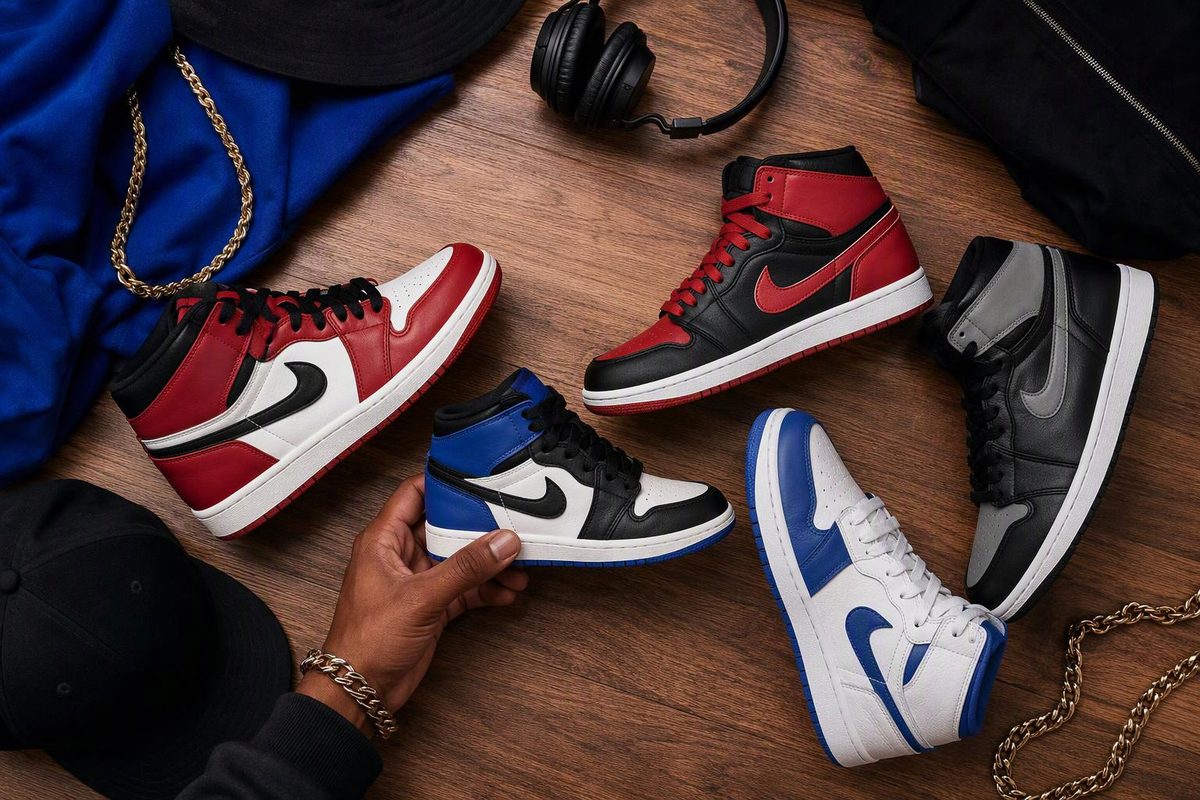
GS means “grade school.” In a sneaker listing such as “Air Jordan 4 Retro GS,” the abbreviation identifies the kids’ or youth-sized edition. It does not describe the colorway, width or quality grade. Adults whose feet fall within the available range can buy GS shoes, but the size conversion alone does not prove that a GS pair matches the adult version in fit or construction.
The exact GS range depends on how the seller organizes its inventory. GOAT’s sneaker glossary defines GS as 1Y through 7Y, while Kids Foot Locker’s size chart uses 3.5 through 7.0 for its grade-school category. On many Jordan and sneaker-marketplace listings, 3.5Y–7Y is therefore the range buyers will encounter. The sizes shown on the actual listing determine what is available; one retailer’s category boundary does not establish a universal range.
Choose a Nike GS size to see its listed men’s and women’s numerical equivalents.
Nike GS Size Converter
| GS / Youth | Nike Men’s | Nike Women’s |
|---|---|---|
| 3.5Y | 3.5 | 5 |
| 4Y | 4 | 5.5 |
| 4.5Y | 4.5 | 6 |
| 5Y | 5 | 6.5 |
| 5.5Y | 5.5 | 7 |
| 6Y | 6 | 7.5 |
| 6.5Y | 6.5 | 8 |
| 7Y | 7 | 8.5 |
Source: Nike US kids’ footwear size chart. These are numerical equivalents; they do not establish identical construction or fit between GS and adult editions.
GS Identifies the Edition, While Y Identifies the Size
The Y after a number means youth. A label such as 5Y is a US youth size 5. GS and Y are related, but they do not perform exactly the same job in a listing.
A retailer might place “GS” in the product title and show “5Y” in the size menu. In that arrangement, GS identifies the grade-school edition being sold, while 5Y identifies the selected youth size. A listing can therefore read “Air Jordan Retro GS” even though every choice in its size menu ends in Y.
That distinction is useful when comparing search results. Two products can share a model name and color description while belonging to different size categories. The GS label tells you which category you have opened before you select a specific size.
Other abbreviations commonly displayed beside sneaker names include:
- PS: preschool
- TD: toddler
- W: women’s
- C: a child-size label, as in 10C
- Y: a youth-size label, as in 5Y
These abbreviations are especially relevant on resale platforms, where different editions may have separate product pages. StockX tells buyers to review the abbreviation in the product name because GS, women’s, preschool and toddler pairs are separate from traditional men’s listings.
A bare number is not enough to identify the category. “5” can be ambiguous when removed from its product page, whereas “5Y” identifies a youth label. When checking a screenshot, order confirmation or resale listing, read the product title and the suffix together rather than relying on the number alone.
Nike GS Sizes Have Direct Numerical Conversions
As of September 25, 2026, Nike’s US kids’ footwear chart gives the following numerical equivalents for the GS sizes most often displayed on Nike and Jordan listings:
| GS / Youth | Nike Men’s | Nike Women’s |
|---|---|---|
| 3.5Y | 3.5 | 5 |
| 4Y | 4 | 5.5 |
| 4.5Y | 4.5 | 6 |
| 5Y | 5 | 6.5 |
| 5.5Y | 5.5 | 7 |
| 6Y | 6 | 7.5 |
| 6.5Y | 6.5 | 8 |
| 7Y | 7 | 8.5 |
For these Nike sizes, the quick women’s conversion is GS size + 1.5. A women’s 7 corresponds numerically to 5.5Y, while a women’s 8.5 corresponds to 7Y. The formula can also be read in reverse: subtract 1.5 from the Nike women’s size to find the corresponding youth number within the listed range.
Nike’s chart aligns a youth size with the same numbered men’s size. For example, 6Y and men’s 6 are numerical equivalents on that chart. They are still labels for different product categories. The matching number should be treated as a conversion reference, not evidence that the two editions use identical materials, proportions or internal construction.
The chart also establishes the limits of this particular conversion. It covers the listed Nike GS sizes from 3.5Y through 7Y. It does not show that every brand uses the same arithmetic, and it does not guarantee that every Nike or Jordan release will be offered in every size shown.
Other Brands Require Their Own Size Charts
Do not automatically apply Nike’s women’s-size arithmetic to every sneaker brand. Adidas publishes its own US youth-and-teen chart, which extends to US 7.5 and provides its own heel-to-toe measurements.
That difference illustrates why “GS” is a category label rather than a universal conversion system. The abbreviation tells you that the shoe is intended for the grade-school or youth market, but the manufacturer’s chart supplies the actual conversion and measurement information.
When the product page and marketplace use different terminology, start with the brand named on the shoe. Find that brand’s chart for the relevant market, then match the exact label shown in the listing. A US youth label should not be silently treated as another market’s sizing system merely because the number looks familiar.
If a marketplace provides a conversion but the brand provides a current chart, use the brand chart as the primary numerical reference. The marketplace’s GS designation remains useful for identifying the edition, but it does not replace the manufacturer’s sizing data.
A GS Pair Is Not Automatically the Adult Shoe in a Smaller Size
A size conversion gives you a labeled-size starting point. It does not establish that a GS release and its adult counterpart have identical fit, materials, cushioning or proportions. Treat the GS and adult editions as separate products unless the manufacturer’s specifications establish otherwise.
Nike, for example, listed the Air Jordan 5 “Reimagined” as a distinct Big Kids’ Air Jordan 5 with SKU HF3976-001 on its Nike SNKRS product page. The “Big Kids” wording and the SKU identify the edition being sold. That information is more precise than assuming every release using the same model and color name is one interchangeable product.
This distinction matters when a buyer cares about more than whether a foot can enter the shoe. Product photos, the complete title, SKU and manufacturer specifications can help establish whether two listings refer to the same edition. A numerical size equivalence by itself cannot answer that question.
The same caution applies when comparing prices or resale listings. A GS listing and an adult listing may appear beside each other under a similar release name, but the category abbreviation tells you they are not automatically the same listing in different sizes. Confirm the edition before comparing what sellers are offering.
Adults Can Wear GS Shoes When the Size and Fit Work
GS describes the product category, not the buyer’s age. An adult whose size falls within a brand’s GS range can consider the shoe. For Nike, the published chart provides the numerical starting point: a women’s 7 maps to 5.5Y, for example.
The conversion should be followed by a fit check. Length is only one part of fit, and a matching size label does not determine how the shoe will feel across the forefoot, around the heel or over the top of the foot. The exact model and edition still need to work for the wearer.
Before buying a GS pair for an adult foot:
- Confirm that the listing says GS, big kids or youth.
- Check whether the selected size uses a Y suffix.
- Use the chart published by the shoe’s brand for the relevant market.
- Compare the GS and adult SKUs when the exact edition or construction matters.
- Check length, forefoot width, heel hold and top-of-foot pressure when trying the pair on.
Our sneaker fit checklist explains how to assess those fit points. If the shoe cannot be tried on before purchase, the brand conversion can identify a candidate size, but it cannot supply missing model-specific fit or construction evidence.
Product Titles and SKUs Prevent Category Mix-Ups
The safest way to read a sneaker listing is from the category outward. First identify whether the title says GS, big kids, women’s, PS or TD. Then read the size suffix. Finally, verify the SKU or manufacturer page if the exact edition matters.
For example, “GS” in a title and “6Y” in the menu are consistent: the first identifies the grade-school edition and the second identifies youth size 6. If a seller describes that pair only as “size 6,” ask which sizing category the number represents before treating it as equivalent to another listing.
A SKU is particularly useful when similar names are reused across category pages. Matching the SKU to an official product page can establish which edition the seller claims to offer. A model nickname or color description alone may not distinguish the GS product from the adult product.
The Practical Meaning of GS at Checkout
When GS appears beside a sneaker name, read it as a product-category warning as well as a sizing clue. It tells you to use a youth or big-kids chart, look for Y-labeled sizes and avoid assuming that an adult listing is identical.
For Nike’s listed range, the conversion is straightforward: the youth number matches the men’s number, and adding 1.5 gives the women’s numerical equivalent. That answers which labeled size to begin with. The product title, SKU, specifications and an actual fit check answer the separate question of whether that GS edition is the right pair to buy.