
Why Most 2026 Jordan Flips Need Better Math
Six July Jordan retros carried no resale premium. See 2026 release losses, fee-adjusted break-even prices, and how Vans and Saucony compare.
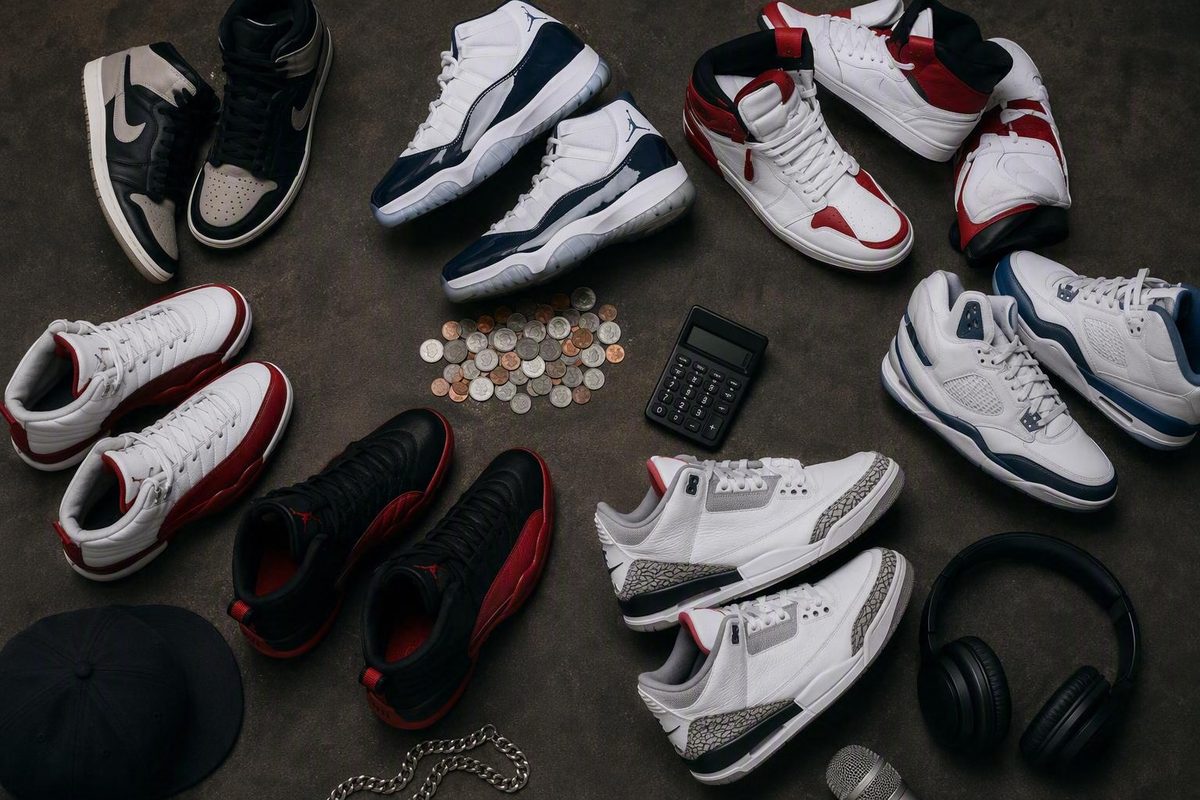
Reselling Jordan sneakers is still selectively profitable in 2026, but the Jumpman logo no longer makes a retail purchase a dependable flip. Six retro Jordan launches in July failed to trade at any resale premium, while the Jordan 4 “Coconut Milk” and kids’ “Sweet Beet” each fell about 35% below retail before seller fees or shipping were deducted, according to WWD’s reporting on the summer slowdown.
That verdict is narrower than saying Jordans are dead. Jordan remained StockX’s second-largest sneaker brand in the first half of 2026, with sales up 6% and average resale prices up 5% year over year. The market is active; buying an arbitrary new Jordan at full retail is what has become unreliable.
Choose a release or enter your own costs; the calculator shows whether the current resale price produces a profit or loss.
The default uses the Jordan 4 “Coconut Milk”: $220 retail, $142 reported resale, a 12.5% illustrative combined fee and $13 fixed selling cost. Taxes are not included.
| Scenario | Sale Price | After Fee And Fixed Cost | Net Result |
|---|---|---|---|
| Reported resale | $142.00 | $111.25 | −$108.75 |
| Original retail as sale price | $220.00 | $179.50 | −$40.50 |
| Calculated break-even | $266.29 | $220.00 | $0.00 |
| Combined Fee | Break-Even Sale | Net At Expected Sale |
|---|---|---|
| 9% | $256.04 | −$103.78 |
| 12.5% illustration | $266.29 | −$108.75 |
| 25% | $310.67 | −$126.50 |
| Pair Or Benchmark | Retail | Resale | Reported Signal |
|---|---|---|---|
| Jordan 4 “Coconut Milk” | $220 | $142 | about −35% |
| Jordan 4 Kids “Sweet Beet” | $165 | $107 | about −35% |
| Vans Old Skool pearlized style | — | — | Vans average premium rose from +12% to +69% |
| Nike Glove ’98 | — | — | Reported premium +126% |
| Saucony brand benchmark | — | — | Sales grew about 238–239% alongside Vans |
A brand-level premium or sales increase does not establish profit for a specific pair. Enter exact dollar prices before comparing an alternative with a Jordan release.
Why The Guaranteed-Jordan-Flip Theory Made Sense
The received wisdom was not irrational. Jordan Brand built a powerful aftermarket around recognizable silhouettes, culturally important colorways and constrained launches. When demand exceeded available retail inventory, buyers who secured a pair at launch could sell into a substantial premium.
A sellout also gave sellers an easy public signal. Retail stock had disappeared, resale listings were visible and collectors understood that some collaborations, original colorways and scarce sizes would command more than their sticker prices.
That logic still applies to genuinely scarce releases with enough buyer demand. Jordan’s first-half StockX results support the limited claim that the brand retains a large, liquid collector market: it ranked second among sneaker brands on the platform, sales increased 6% and average resale prices increased 5%. StockX’s midyear figures were reported by WWD.
The mistake is treating those brand-wide figures as evidence that a new pair bought at retail will be profitable. Sales growth counts transactions, including sales below retail. Average price growth can reflect older collectibles, collaborations, product mix, condition and size. Neither figure reveals what an individual seller paid or retained after expenses.
StockX itself acknowledged that some recently released Air Jordans could be found on the platform below their original retail prices. A healthy category and an unprofitable release can therefore exist at the same time.
Specific 2026 Jordans Started Below Break-Even
The women’s Jordan 4 “Coconut Milk” carried a reported $220 retail price and traded around $142. That is a $78 gross decline, or roughly 35%, before sales tax, marketplace deductions or seller-paid shipping.
The kids’ Jordan 4 “Sweet Beet” fell from a reported $165 retail price to $107. Its $58 decline was also roughly 35% before selling costs.
| Release | Retail | Reported Resale |
|---|---|---|
| Jordan 4 “Coconut Milk” | $220 | $142 |
| Jordan 4 Kids “Sweet Beet” | $165 | $107 |
A seller who paid retail for either pair could not recover the purchase price at those resale levels, even on a hypothetical fee-free sale. Actual percentage fees and fulfillment costs deepen the loss. Sales tax, when applicable, raises the acquisition basis further.
The wider launch record was also weak. Needham analyst Tom Nikic found that six retro Jordan Brand launches in July 2026 failed to trade at a resale premium despite Jordan Brand having reduced supply in recent years. Three of the first five August launches covered in the same reporting traded at discounts.
These figures cover selected releases and reported market snapshots, not every size, platform or transaction. A discounted acquisition could produce different economics, and a scarce collaboration could still work. What the examples disprove is the assumption that paying retail for a Jordan retro creates a premium by itself.
Break-Even Is Higher Than Retail
The relevant number is net profit, not the gap between a sticker price and an online asking price. Net profit equals sale price minus the tax-inclusive acquisition cost, percentage fees, fixed charges, seller-paid shipping, packaging and other direct transaction costs.
Asking prices do not establish that a buyer will pay. Recent completed sales and executable bids are stronger evidence, but even those prices must clear the seller’s full cost structure.
When every percentage fee is charged against the sale price, break-even sale price equals fixed costs divided by one minus the combined fee rate. Fixed costs include the acquisition basis and fixed selling expenses.
A published illustration uses a $143 tax-inclusive acquisition cost, a $185 sale, a 9.5% transaction fee, a 3% processing fee and $13 seller shipping. The visible spread is $42, but the modeled net profit is only $5.87 before packaging, labor, storage or transaction risk. Profits by Payback publishes the assumptions and calculation.
| Item | Calculation | Amount |
|---|---|---|
| Sale price | — | $185.00 |
| Transaction fee | $185 × 9.5% | −$17.58 |
| Processing fee | $185 × 3% | −$5.55 |
| Shipping | — | −$13.00 |
| Acquisition cost | — | −$143.00 |
| Modeled profit | — | $5.87 |
With the same $143 acquisition cost, $13 shipping and 12.5% combined fee rate, the break-even sale price is approximately $178.29. That threshold recovers the modeled costs but pays nothing for the seller’s time or the risk of holding inventory.
Applied to the “Coconut Milk” at its $220 retail price, the calculator’s default 12.5% fee and $13 fixed cost produce a break-even price of about $266.29 before sales tax. A $142 sale produces an estimated $108.75 loss under those assumptions. Even a $220 sale—the original retail price—still loses an estimated $40.50.
The fee assumptions are illustrative, not universal platform charges. Seller tiers, processing fees, shipping responsibility and payout rules can differ. Current account terms must be checked before purchasing.
Lower-Hype Brands Are Producing Different Signals
Jordan’s weak releases appeared during a broader shift in StockX activity. Vans’ average resale premium increased from 12% to 69% year over year, while Vans and Saucony sales each grew roughly 238% to 239%. That outpaced Jordan’s 6% sales growth and 5% average price growth over the same period.
The Nike Glove ’98 was another outlier, carrying a reported 126% resale premium. These figures show that resale momentum was not confined to the most familiar Jordan silhouettes.
They do not prove that any Vans, Saucony or Nike purchase will be profitable. The supplied evidence does not provide exact retail and resale dollar prices for the referenced Vans Old Skool pearlized-style pairs, a specific Saucony release or the Nike Glove ’98. Those unknowns are marked with dashes in the calculator rather than converted into invented dollar returns.
Brand-level growth also cannot replace pair-level analysis. Vans’ 69% average premium is a platform-wide benchmark, not a guaranteed premium for every Old Skool. Saucony’s sales growth measures activity rather than seller profit. The comparison is useful because it challenges the idea that familiar Jordan heat is the only place to look, not because it supplies automatic alternatives.
Exact Size And Acquisition Cost Decide The Trade
“Jordan 4” is not a complete valuation. The style code, colorway, size, condition, box and accessories identify the product being sold. Different sizes of the same release can have different bids, sale frequency and downside risk.
Recent completed transactions for that exact product provide the first usable price range. A single unusually high sale should not set the forecast. The relevant pattern is whether several recent results are clustered, rising or declining and whether the pair sells frequently enough to provide a realistic exit.
Bid depth matters when the projected margin is thin. One high bid may disappear before the pair reaches authentication. Several bids near the same level provide a more resilient exit than a steep drop behind one buyer.
Retail availability supplies another check. If the release remains available from multiple stores, buyers have little reason to pay a large premium. Restocks, retailer promotions and markdowns can weaken the resale case even if one launch page says “sold out.”
A purchase decision should compare three prices:
| Price | What It Measures |
|---|---|
| Expected sale | Recent, realistic market value |
| Break-even sale | Minimum price that recovers modeled costs |
| Downside exit | Likely price if demand weakens or cash is needed |
The downside case prevents a small expected gain from hiding a much larger possible loss. If the trade works only at the highest asking price, it does not have a defensible margin.
Discounted And Used Jordans Follow Different Economics
The 2026 release results apply most directly to the classic launch-day model: paying full retail, usually plus tax, and expecting immediate scarcity to create a premium. Lower acquisition costs can change the result.
A discounted pair can be profitable below its original retail price because the seller’s break-even is based on the amount actually paid. A commercial general-sneaker example modeled a $65 sale after an $18 acquisition, a 12% fee and $10 shipping as a $29.20 profit. The same $65 sale after an $85 acquisition produced a $37.80 loss. These are promotional calculations rather than verified Jordan transactions, but they demonstrate how cost basis reverses the outcome. SneakerCycle publishes the modeled comparison.
Used Jordans are a labor-dependent business rather than a launch flip. The seller must assess authenticity, structural damage, outsole wear, separation, cracking, odor, repairs, replacement parts and missing accessories. Cleaning and accurate grading may improve marketability, but restoration cannot create buyer demand.
Long-term holding is different again. It ties up capital while exposing the pair to changing tastes, rereleases, storage deterioration and an unknown sale date. The Air Jordan 1 “Lost and Found” illustrates premium compression: originally priced at $180, it had reportedly traded around $500 to $600 but could be found in early 2026 in the high $200s to roughly $300 depending on size and marketplace. It remained above retail, yet much of its former premium had disappeared. NPR reported the approximate, size-dependent range.
Fashion may be cyclical, but no supplied evidence provides a dependable timetable for a Jordan recovery. Holding because the current exit is disappointing is not the same as holding because demand and supply data support a future gain.
The Purchase Must Work After Every Deduction
A viable buy has an expected sale price that clears break-even by enough to compensate for price movement, authentication or return exposure, holding time and a disappearing bid. There is no evidence-based universal minimum margin.
A hold requires a documented reason to expect stronger future demand and enough available capital to wait. Review the position after a restock, a material change in completed sales or a drop in bid depth rather than relying on the silhouette’s reputation.
A discount or exit becomes rational when completed prices weaken, retailers mark down remaining stock, bids thin out or the inventory blocks a better use of capital. Recovering cash through a controlled loss can be preferable to waiting for an unsupported rebound.
The practical edge in 2026 is not merely securing a Jordan at launch. It is acquiring the exact pair at a cost that leaves room for fees, verifying demand in its exact size and choosing an exit price that produces an actual payout rather than a visible but misleading gross spread.
Jordan Resale Profitability Questions
Does Selling Above Retail Guarantee A Profit?
No. Retail excludes purchase tax and may exclude inbound shipping. The resale price must also cover marketplace fees, payment charges, seller-paid fulfillment, packaging and other direct expenses.
How Can Jordan Sales Grow While New Releases Lose Money?
Sales growth measures transaction activity, not profit per seller. Below-retail sales still count, as do older collectibles, used pairs, discounted acquisitions and sizes with different market values.
Is Buying Below Retail Automatically Safe?
No. A discount lowers break-even but does not create demand. Excess supply, undesirable sizing, poor condition or authenticity problems can still make the inventory unprofitable.
Are Jordan 1s, Jordan 4s Or Collaborations Guaranteed Winners?
No. Silhouette and collaboration status are demand signals, not substitutes for exact-size completed sales, bid depth and full cost accounting.