
Choose The Right Jordan 1 High And Starting Size
Compare Jordan 1 High OG, High ’85, Zoom CMFT 2 and Mid, then check sizing labels, width, toe room and heel hold before committing to a pair online.
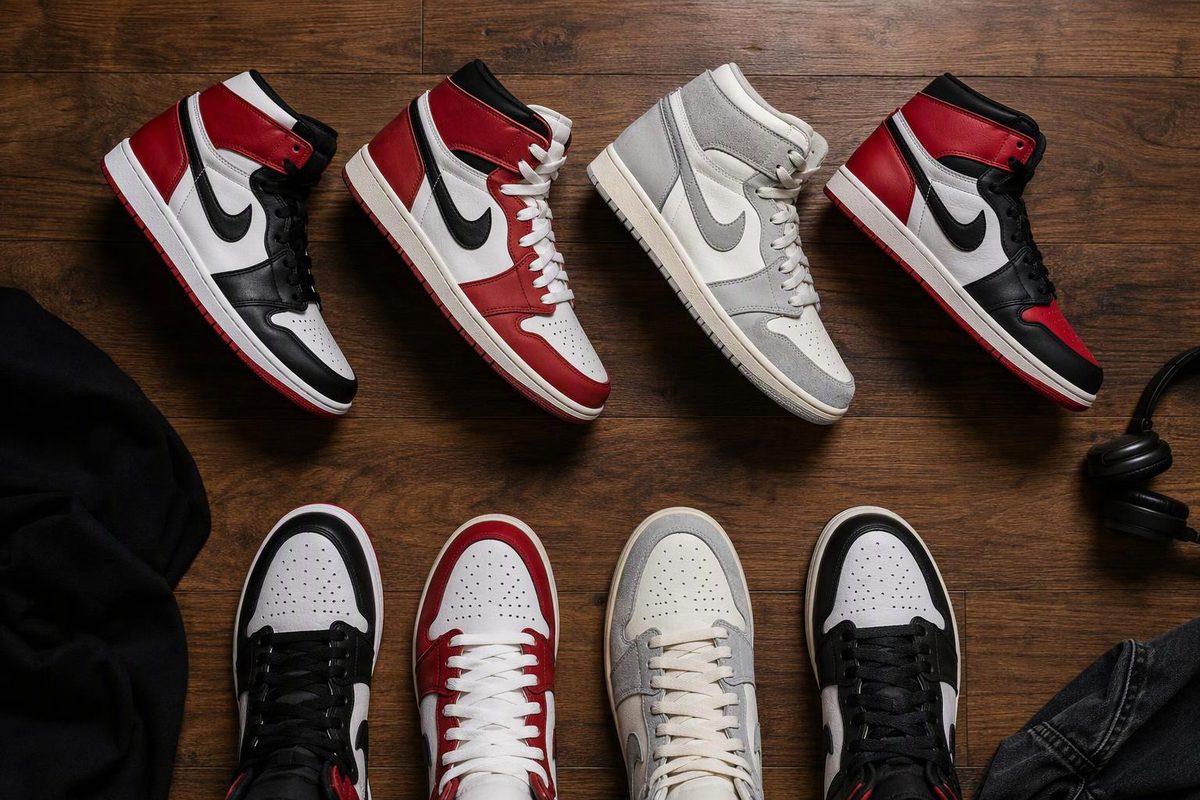
For Jordan high tops in the Air Jordan 1 family, start with the full model name and your usual well-fitting sneaker size. The conventional AJ1 High is generally described as true to size, but width and heel hold still need checking. Choose the High OG for the familiar high-cut retro, compare the High ’85 for its original-shape emphasis, and consider the Zoom CMFT 2 for its different cushioning construction. The Jordan 1 Mid is a separate cut—not another name for the High.
These are starting points, not interchangeable fit guarantees. This guide covers the Air Jordan 1 family; its sizing advice does not automatically apply to other numbered Jordans. The sources below do not establish one exact size adjustment for every AJ1 model and foot shape.
Select the model and your foot width to get a sizing starting point and the check that matters next.
AJ1 Sizing Starting Point
Start With Your Usual Well-Fitting Size
General AJ1 guidance describes the conventional High as true to size. This is a starting point, not a fit guarantee.
Next Check: Try both shoes. Confirm comfortable toe room, a secure forefoot and a heel that stays seated.
Match the listing’s regional size system and men’s, women’s or youth category before choosing a number.
Model Limits And Width Caveats
High OG: Materials and finishes vary by release. General true-to-size advice does not guarantee sufficient width.
High ’85: Sole Retriever reports generally true-to-size fit with longer break-in than conventional Highs; no break-in duration is established here.
Zoom CMFT 2: Nike Qatar lists Formula 23 foam and suede for the cited release. The cited evidence does not establish a model-specific size adjustment.
Mid: Nike identifies the Mid SE as a mid-top. Conventional High guidance is not a model-specific fit rule for the Mid.
Wide Feet: Hibbett’s general Jordan guidance suggests comparing a half-size up; Sole Retriever advises starting true to size and considering more room for particularly wide feet. Keep heel hold in the comparison.
Narrow Feet: No fixed size-down rule is established. Do not sacrifice toe room to tighten the collar or reduce creasing.
Sources: Hibbett and Sole Retriever sizing guides; Nike product listings, footwear chart and sneaker-fit guidance cited in the article. No exact personal size is calculated.
The Full Model Name Determines What You Are Comparing
A colorway tells you which appearance you are shopping for, but it does not establish the shoe’s construction. Before comparing sizes or prices, find the model name on the listing. “Jordan 1” alone leaves several possibilities open.
| Model | Construction Emphasis | Buying Implication |
|---|---|---|
| Retro High OG | Classic high-cut retro | Check the exact release’s materials |
| High ’85 | Original stance and shape | Do not expect an identical High OG feel |
| Zoom CMFT 2 | Formula 23 foam | Compare if cushioning is a priority |
| Jordan 1 Mid | Separate mid-top cut | Buy it deliberately, not as a mislabeled High |
The model name is your first filter. If you want the familiar AJ1 High design, a High OG listing is the relevant place to start. If you want the ’85 shape, confirm that the listing actually says High ’85. If a seller uses “high tops” loosely, read the product name rather than relying on that category label.
Materials matter at the release level, too. A leather specification on one product page does not prove that every High OG uses the same materials or finish. Keep the style code with your comparison so that two similar-looking listings do not become an accidental comparison of different products.
High OG Specifications Belong To The Exact Release
For a concrete example, Millennium Shoes’ listing for DZ5485-010 specifies genuine leather, encapsulated Air-Sole cushioning and a rubber outsole. Those specifications describe that release—not every shoe carrying the AJ1 name.
Use that level of identification when checking a pair. “Air Jordan 1 Retro High OG” identifies the model; the style code identifies the particular product being offered. A listing that leaves either unclear gives you less certainty about what you will receive.
That distinction also keeps a fit comparison useful. An experience with a previous High OG can be a reference point, but it is not evidence that the materials and feel of another release are identical. Check the current listing rather than transferring every detail from an older pair.
High ’85 Is A Separate Comparison
Nike describes the High ’85 “College Navy” as returning to the original stance and shape with premium leather. That description is tied to the named release; it does not establish the materials of every High ’85 colorway.
For fit, Sole Retriever’s AJ1 guide reports that High ’85 pairs generally fit true to size but take longer to break in than conventional Highs. It also describes the Jordan 1 generally as true to size and cautions against treating sizing down to prevent creases as a universal solution.
The useful distinction is between a size starting point and an immediate feel. A true-to-size recommendation does not promise that the High ’85 will feel like a High OG when first laced. Nor does a longer reported break-in period prove that a pair pressing against your toes is the correct size. Check length, width and heel hold separately.
Zoom CMFT 2 Changes The Construction, Not The Fit Guarantee
Nike Qatar’s Zoom CMFT 2 listing specifies suede and Formula 23 foam. That makes it a relevant comparison if cushioning matters more to you than traditional construction.
It does not prove that every wearer will prefer the CMFT 2, and it does not supply a universal size adjustment. The sources here do not establish a model-specific sizing rule for the CMFT 2. Treat your familiar sneaker size as a candidate to test, not as a confirmed conversion from a High OG.
Comfort also needs a specific meaning when you compare these shoes. A cushioning preference and enough forefoot room are separate issues. A pair can offer the construction you want while still being the wrong size or shape for your foot.
The Mid Is Not A High Under Another Name
Nike explicitly identifies the Jordan 1 Mid SE as a mid-top inspired by the original AJ1. Choose it if that is the cut you want, rather than treating it as a substitute listing for a High.
The distinction matters when reading fit advice. Guidance about a conventional AJ1 High is not, by itself, model-specific evidence for a Mid. A seller’s broad “Jordan high tops” heading should not override the actual product name.
Your Existing Comfortable Size Is The Starting Point
Hibbett’s sizing guide describes the Jordan 1 as generally true to size. Along with Sole Retriever’s guidance, that supports starting with your usual well-fitting sneaker size for a conventional AJ1 High.
“Usual” should mean a size that gives you comfortable length and a secure fit in comparable sneakers—not simply the number you buy most often. Our guide to what TTS means explains why true to size needs a reference.
If your current reference pair squeezes your toes or lets your heel slide, copying its label does not solve the fit problem. Use a pair that already fits well, and confirm that its regional sizing system and category match the listing you are considering.
Standard-Width Feet Should Test The Usual Size First
Start with your established comfortable size. Then check whether that particular AJ1 gives you toe room, a secure forefoot and stable heel hold. The true-to-size guidance narrows the first size to try; it does not replace those checks.
Avoid changing sizes solely because the shoe looks large or because you want a closer-looking fit. The question is whether your foot fits inside the shoe comfortably when it is laced for actual wear. Appearance cannot settle that.
Wide Feet Should Compare Width Without Losing Heel Hold
Hibbett’s general Jordan guidance suggests a half-size up for wider feet. Sole Retriever’s AJ1 guidance recommends starting true to size and considering more room for particularly wide feet. These recommendations have different scopes; neither establishes that every wide-footed wearer needs the same adjustment.
If your starting size squeezes the forefoot, compare it with a half-size up. Keep the comparison focused: does the larger pair relieve pressure, and does your heel remain comfortably seated? A longer shoe is only useful if the extra space does not create excess sliding.
If the larger size trades side pressure for loose heel hold, you have not found a clear solution. Do not call that pair a better fit merely because one problem improved. The available guidance does not provide an exact width measurement or a universal size increase that resolves this trade-off.
Narrow Feet Still Need Enough Toe Room
Do not size down solely to reduce creasing or make the ankle collar tighter. First establish whether a smaller size leaves comfortable room at the front. Sole Retriever’s caution about crease-driven downsizing applies here: cosmetic goals are not a universal sizing rule.
If the shoe feels loose, identify where. A loose collar, a sliding heel and excess space around the forefoot are not the same observation. Try the shoes laced as you intend to wear them before deciding that a different size is necessary.
The sources here do not establish a fixed size-down recommendation for narrow feet. Your result should come from the whole-shoe fit, not a presumed adjustment based on width alone.
Fit Must Work Below The High Collar
Nike’s sneaker-fit guidance supports checking toe room, forefoot and midfoot comfort, and heel hold. Try both shoes, lace them as you intend to wear them, and walk indoors before committing.
A snug high collar is not proof that the shoe fits elsewhere. Judge the parts of the shoe separately, then decide whether they work together.
| Area | Acceptable Feel | Reason To Reconsider |
|---|---|---|
| Toes | Can move comfortably | Press against the front |
| Forefoot And Midfoot | Secure, not squeezed | Pressure across sides or top |
| Heel | Comfortably seated | Slides around |
Do not let a good result in one row cancel a poor result in another. Enough toe length does not establish enough width. A firmly held ankle does not establish a stable heel. A roomier forefoot does not justify unwanted movement elsewhere.
For the High ’85 in particular, keep the reported longer break-in separate from this assessment. Initial stiffness and insufficient space are different concerns. The draft’s sources do not quantify a break-in period or promise that a specific pressure point will disappear, so there is no evidence-based number of wears to prescribe.
If you are choosing between two sizes, compare them under the same conditions. Changing how you lace the shoes while changing the size makes it harder to tell which adjustment produced the better fit.
A Size Number Needs A System And Category
A listing marked only “size 9” is incomplete. Confirm the regional system—such as US, UK or EU—and whether the listing uses men’s, women’s or youth sizing before selecting a pair.
On Nike’s footwear chart, US men’s 9 corresponds to US women’s 10.5. That is a chart correspondence, not permission to assume every numeral on a listing uses the same category. Read the label before applying it.
When measuring from scratch, Nike recommends measuring both feet and using the longer measurement. Nike also warns that the CM number on a shoe label is different from measured foot length. Do not treat those two measurements as interchangeable.
For youth listings, use our GS sizing guide rather than assuming the same numeral identifies the same product. A familiar size number can conceal a different sizing category.
Confirm The Listing Before Committing
Before buying, confirm the full model name, style code, sizing category and return conditions. These checks resolve different uncertainties: the name establishes the version, the code identifies the release, the category makes the size interpretable, and the return terms tell you what happens if the fit fails.
If the listing omits a detail, ask for it rather than filling the gap from the colorway or product photo. For an online purchase without a try-on, a clear product identity and workable return conditions matter more than a confident but unsupported size prediction.
The buying decision is straightforward: choose the AJ1 version you actually want, use the conventional High’s true-to-size guidance as a starting point where applicable, and keep only the pair that works at the toes, forefoot and heel. Neither the Jordan name nor the high collar can substitute for those checks.